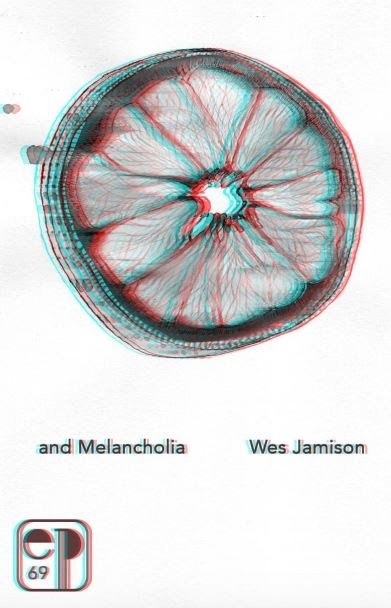
Lyric Essay | Essay Pres | 2016
and Melancholia
“[A] painfully vertiginous self we can all recognize as nothing short of real life.”
A winner of the Essay Press Chapbook Contest
and Melancholia maps the many sides of grief—specifically overlap of despair and desire as a relationship slowly falls apart. The essay mourns a burning Chicago alongside a romance that hasn't quite ended yet, creating what Julie Carr describes as “the story of how words, especially the detailed and measured words of poetry, forge a psyche to forage within.” Ultimately, it ties language, the body, and the city together through a “seductive” narrative and a “painfully vertiginous self.”
“Wes Jamison’s epistle is…the story of how words, especially the detailed and measured words of poetry, forge a psyche to forage within. More specifically, and Melancholia shows us the alchemical process whereby language, beaten to a shine, begets desire and its partner: remorse. ”